Charlie is a regular columnist for Homebuilding & Renovating, which is one of Britain’s most successful self-build magazines. In the September issue read Charlie’s Design Masterclass on the secret to a successful barn conversion.
The secret to a successful conversion is working with the existing building, rather than shoehorning in ‘traditional’ domestic features, says designer Charlie Luxton.
With a practice in rural north Oxfordshire I’ve been lucky enough to work on lots of barn conversions and I love designing them. I relish the challenge of creating a functional, dramatic home while maintaining the core ‘barn-y-ness’ of the building. For me, the Litmus test for the success of any conversion is that, if led blindfolded into one and then unmasked, you should immediately know what kind of building you’re in. Too often conversions obliterate and obscure a barn’s origins so that it looks and feels like an ordinary but oddly proportioned house, and not a celebration of the utilitarian beauty of the existing building.
In many ways, barns are a bit like relationships — if you hope to take one on because you want to change it, then don’t. If you can love it for what it is, quirks and all, then a barn’s life is for you.
Embrace the Functional Beauty
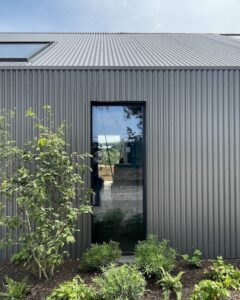
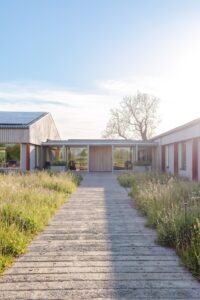
The recent changes to planning rules have opened up the possibility of residential conversion for many agricultural structures previously considered not worthy. Dutch barns (opposite, left), corrugated metal barns and pole barns are supremely functional. Embracing the ‘barn-y-ness’ of these buildings is even more important in getting the best out of this latest crop of agricultural buildings ripe for conversion. I find real beauty in their pragmatic simplicity, but you do have to work with their core character and make the structure, form and materials work for you rather than force them to be what they are not.
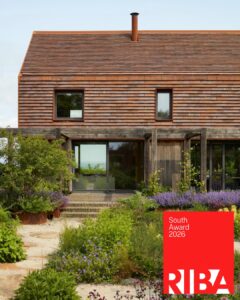
The barn form lends itself to so much of what we want in a modern home — space, height and massive openings for walls of glass. They allow for experimentation in affordable, interesting materials, too. Metal, timber, fibreboard, rubber, you name it, pretty much anything goes with these buildings — except trying to make them what they are not. They are not constructed from traditional house materials, for instance, so trying to reclad them in slate, tile, brick or stone will more than likely end up looking wrong. Nor are they ‘polite’, with regularly spaced portrait windows which conform to the Golden Ratio. They shouldn’t have porches, dormers, brick chimneys or fiddly domestic details. If you do want these features, go and buy a house! If you want to go on an adventure into design and a home full of architectural interest, barns are a good bet.
Getting the Interior Spaces Right
Another challenge with barns is fitting in all the rooms and functions necessary in a modern home without subdividing the space too much; again, think back to the blindfold test. I also always try and make a ‘moment’ in a barn conversion when you can understand the entire height, width and length of the original space; a memory of the raw, untamed building. Architecture needs drama and barns can provide this through wonderful uncluttered space — keeping this alive as you transform your barn is key to success.
The blindfold test should also apply to the interior design and fit-out. The interior and exterior should chime. This could be through simple, rustic, agricultural-inspired construction using traditional materials, or contrasting super-sleek modern minimalism (the Kitchen Architecture Bulthaup kitchen, above, being a prime example). It is not for me to say how it should be or look, but it must communicate and be in dialogue with the buildings roots.
Introducing Light
When built, barns were not conceived for human habitation. As such, they usually have very few openings, but those openings which they do possess tend to be either massive – designed for loading and unloading industrial-scale machines and/or animals – or very small, for purposes of cross ventilation. Getting light into all the rooms without punching the building with too many new openings, is one of the single biggest challenges facing converters.
There are no hard and fast rules but I tend to start with the light and view, locating the principal habitable rooms where the main openings are, while accepting that some parts of the building will, most likely, be dark. Utility, plant rooms and WCs may only have borrowed light but if handled well and contrasted against spacious, light-filled living and circulation areas, they can be an interesting counter note in the wider composition of the design. Dark, cosier spaces may well lend themselves to snugs and living rooms used in the evening.
Do all you can to avoid new openings. Where they are absolutely crucial, consider them in the same vein as the existing structure. Fewer larger openings are nearly always better than multiple smaller ones. Single openings that span between floors or rooms so that externally they appear as one opening rather than two, can help maintain a building’s integrity. Barns were not generally designed with polite symmetry in mind, they are often a bit random and asymmetric, so try and continue that in your alterations. Most barns are a simple rectangular shape, so rooflights are key to getting light into the middle of the building while maintaining the monolithic integrity of the walls. Here too anything domestic is the enemy so think large single rooflights rather than multiple small ones.